Photographer's Journal
Mapping the Black Water Gems
Peatland Biodiversity of Mahakam Tengah
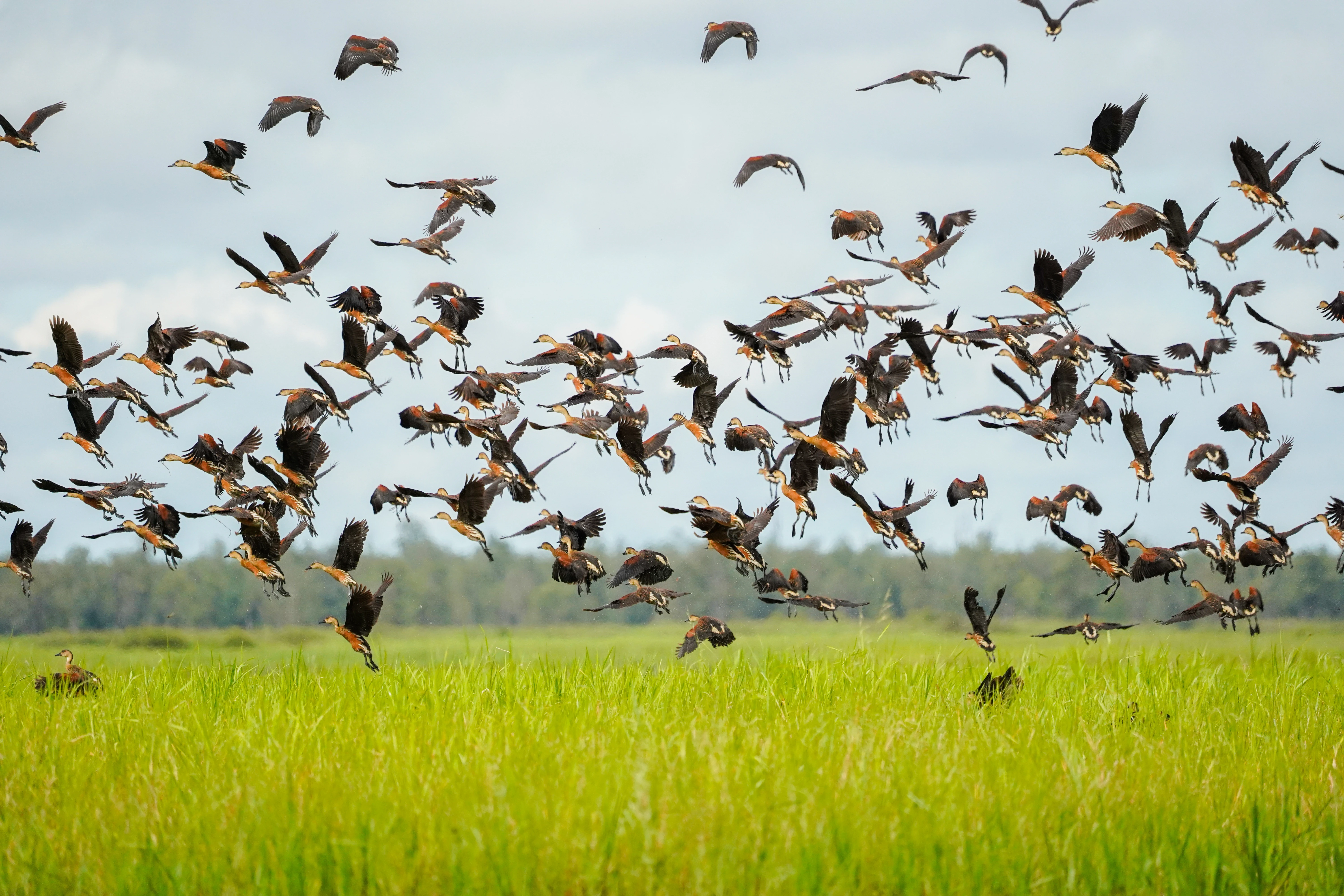
The water here is the color of strong tea. The locals call it water of a thousand roots, and they mean it medicinally, ecologically, ancestrally. You don't understand a peat swamp until you understand that the darkness of the water is the point. It means the ecosystem is intact.
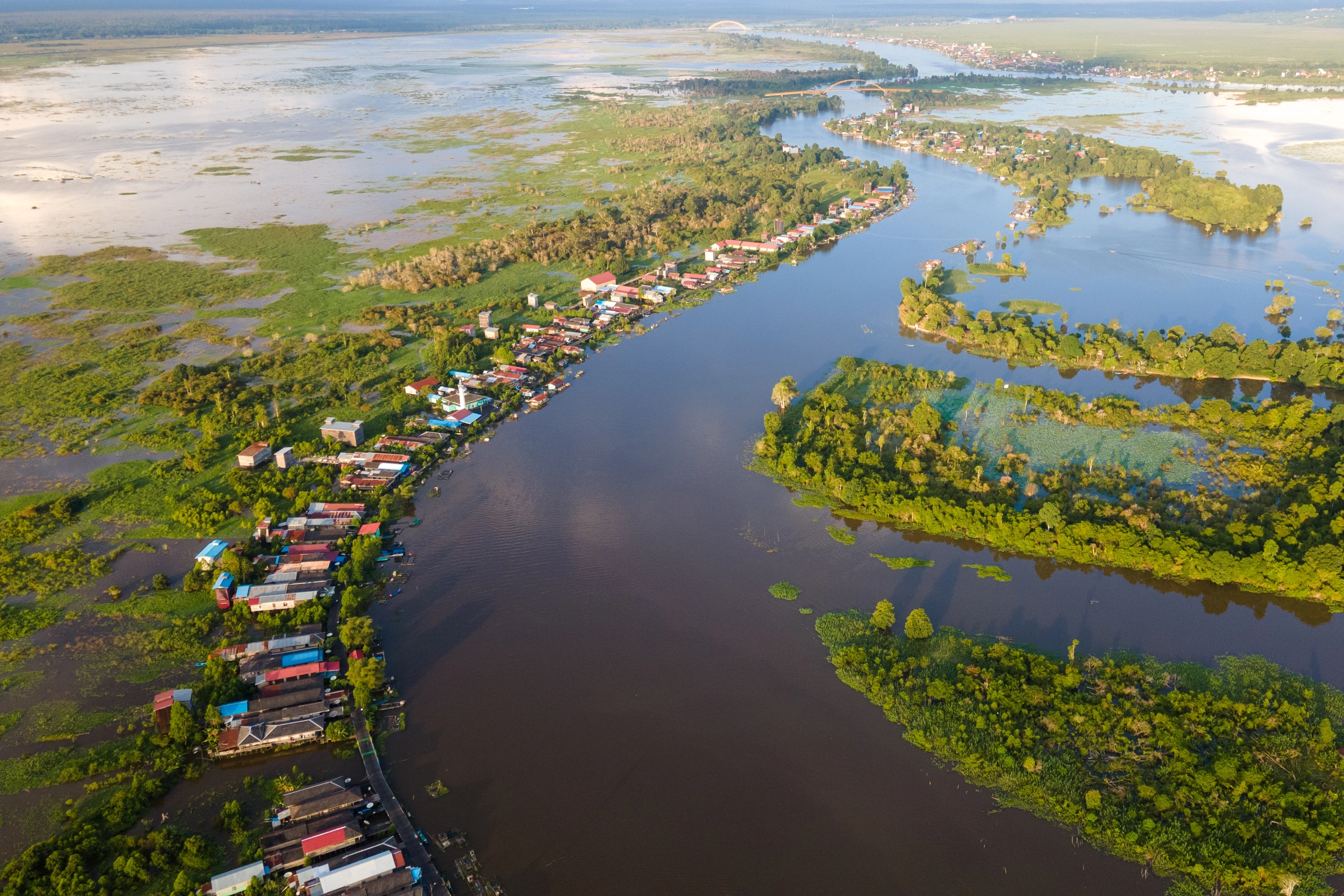
The goal was to document the peatland ecosystems of Central Mahakam, East Kalimantan, one of Indonesia's most significant carbon storage landscapes and a critical freshwater habitat for the endangered Irrawaddy dolphin, and to show how four communities (Muarasiran, Pela, Muhuran, and Minta) depend on and actively steward these forests, while making the case for the urgent formal mapping and protection of the Peat Hydrological Unit across 16 sites in East Kalimantan.
The challenge was partly visual, partly conceptual. Peatlands do not cooperate with dramatic photography. The terrain is flat, the palette is muted, and the lives lived here happen mostly on boats and in floating structures, intimate, quiet, and easily missed. The ecosystem's significance is enormous and invisible at the same time. Carbon reserves measured in meters of depth. Hydrological systems that regulate fishery chemistry across entire river basins. None of it telegraphs urgency the way a burning forest does.
And these communities were under real pressure, with failed palm oil programs, unpredictable flooding, and species invasion, without adequate legal frameworks to protect what they had always managed well on their own.
I worked with writer Fikri Muhammad, supported by GIZ's PROPEAT program and the Ministry of Environment and Forestry's Peat Damage Control directorate. The photography moved between scales: aerial drone documentation of the full peat hydrological landscape, and then deeply close, including swiftlet nest harvesting in the forest over Danau Siran, swamp buffalo grazing at dusk, a woman weaving telinsing leaves that only grow in peatland, a fisherman pulling a net at the confluence of flood season and drought. In Desa Pela, access to the Irrawaddy dolphin habitat required coordination with the local tourism awareness group who had spent years turning their dolphin-watched river into a reason for tourists, and policymakers, to care.

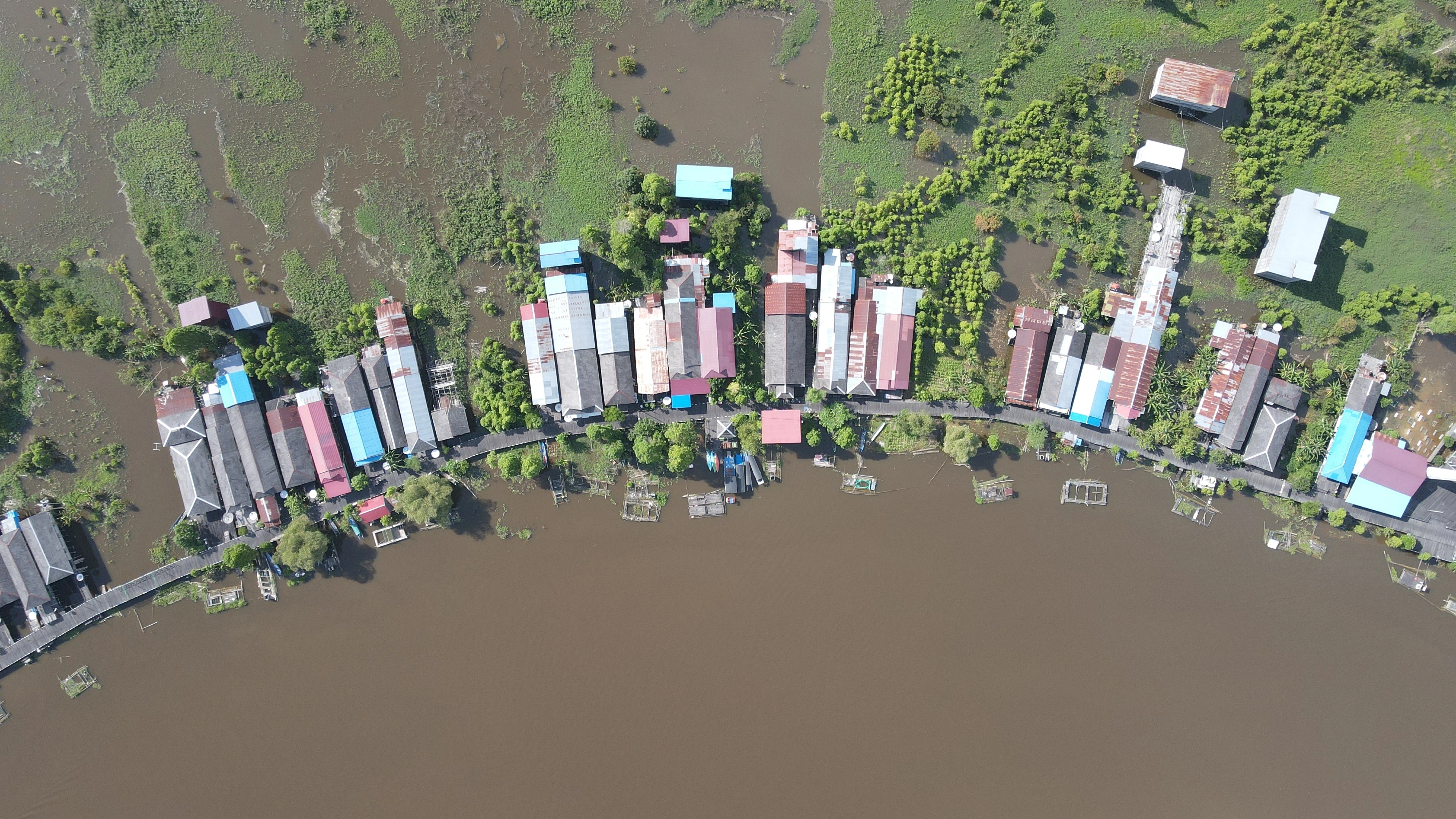
The story supported the policy context around Minister of Environment and Forestry Decree 246/2020, Indonesia's national peat ecosystem protection and management plan spanning 2020 to 2049. The visual documentation covered a peat hydrological zone with depths of one to seven meters, spanning protected forests of 4,551 hectares in Muarasiran alone, produced alongside Indonesia's first formal effort to spatially map and protect these ecosystems.
What it did qualitatively was harder to legislate but perhaps more durable: it made abstract policy feel like a person. The farmer in Muhuran who still plants rice in floodwater because there is no other skill, no other economy, and no other identity available to her. The village that chose dolphin tourism over motorboat racing and is slowly winning. The fisherman who knows from the chemistry of the water, not from any dataset, that the peat upstream is healthy or stressed. These are the custodians the maps need to name.