Photographer's Journal
Bonding in the Papua Wetlands
Wetlands of Wasur National Park, Merauke
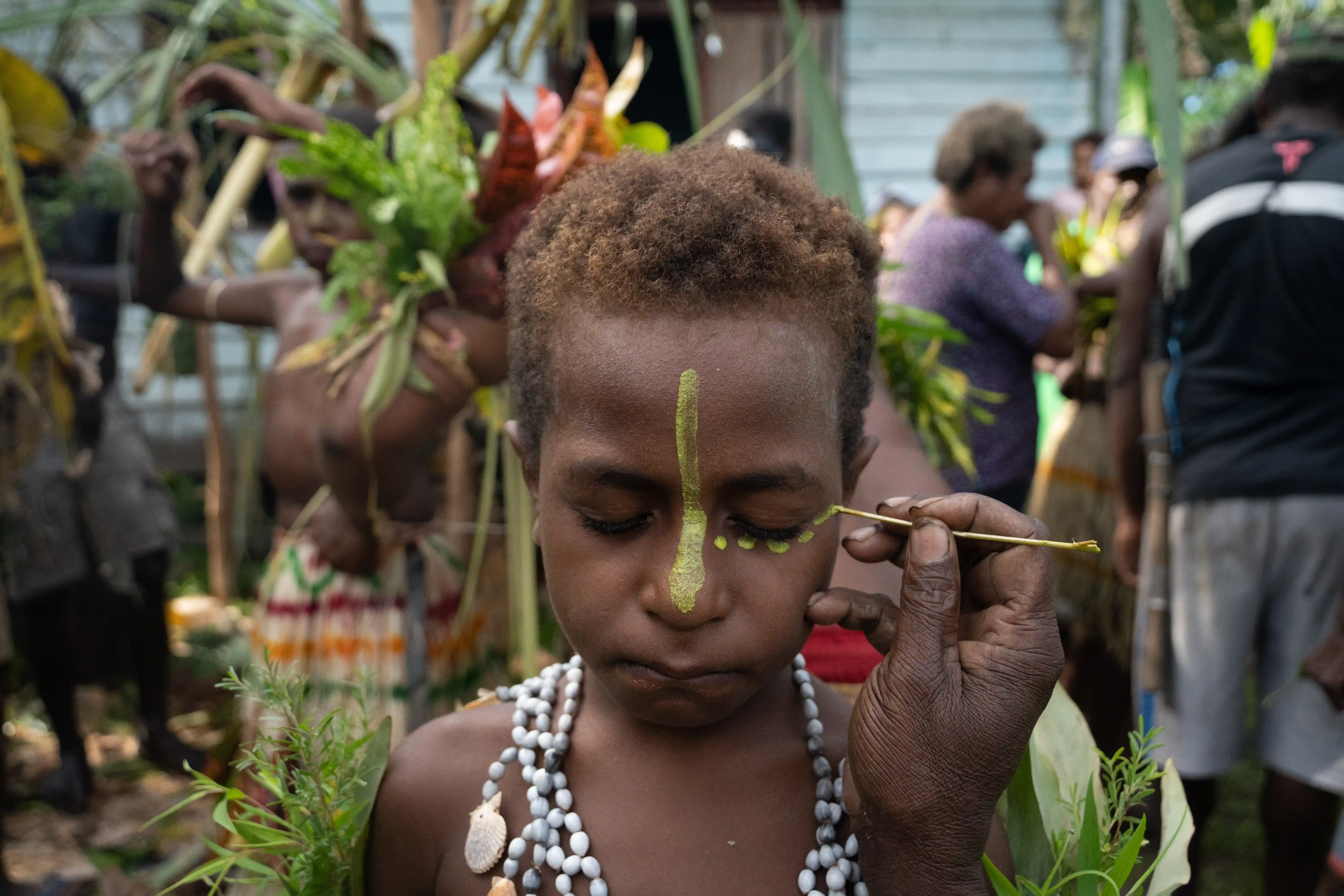
I had been warned about the mosquitoes. Nobody warned me about the pelican.
Rounding a bend in the swamp, our canoe nearly collided with an Australian pelican drifting in the stillness, wingspan wider than the boat, utterly unbothered. That encounter, unexpected and close enough to feel, became the emotional center of everything I photographed in Wasur. A place so alive it doesn't announce itself. It simply is.
The goal was to document the ecological and cultural entanglement of the Wasur wetlands in southeastern Papua, one of Indonesia's most biodiverse yet least-known landscapes, and to reveal how the Marori Men-Gey and Kanume peoples have functioned as de facto conservationists for generations, through totemic relationships with wildlife, the sar/sasi resource-management system, and a genuine co-management relationship with Wasur National Park.
The story needed to span Danau Rawa Biru, Youram Savanna, and Kampung Wasur, covering migratory birds, marsupials, invasive species, and living ritual traditions.
Wasur is not easy to reach, and it is not easy to stay in. The ecosystem, a seasonal swamp-savanna mosaic, runs on its own clock: extreme heat, dense insect swarms, and nocturnal wildlife that has no interest in daylight photography. I spent a night in Youram Savanna that I will not forget. Midnight heat as fierce as midday. The Milky Way above, malaria paranoia below.
But the harder challenge was trust. Communities here carry cultural knowledge and sacred protocols that are not visible to outsiders who arrive and leave in a day. Photographing the cabut misar ceremony, a living ritual that governs both grief and natural resource access, required time, presence, and the kind of sensitivity you cannot fake.
I worked alongside writer Agus Prijono, guided entirely by La Hisa, a National Park ecosystem controller whose knowledge of Wasur's birds and cultural geography is more encyclopedic than any field guide. He taught me how to read the savanna. He pointed out wallabies in grass I had dismissed as empty. He explained which bird flying overhead was the totem of which clan before I could raise my lens.
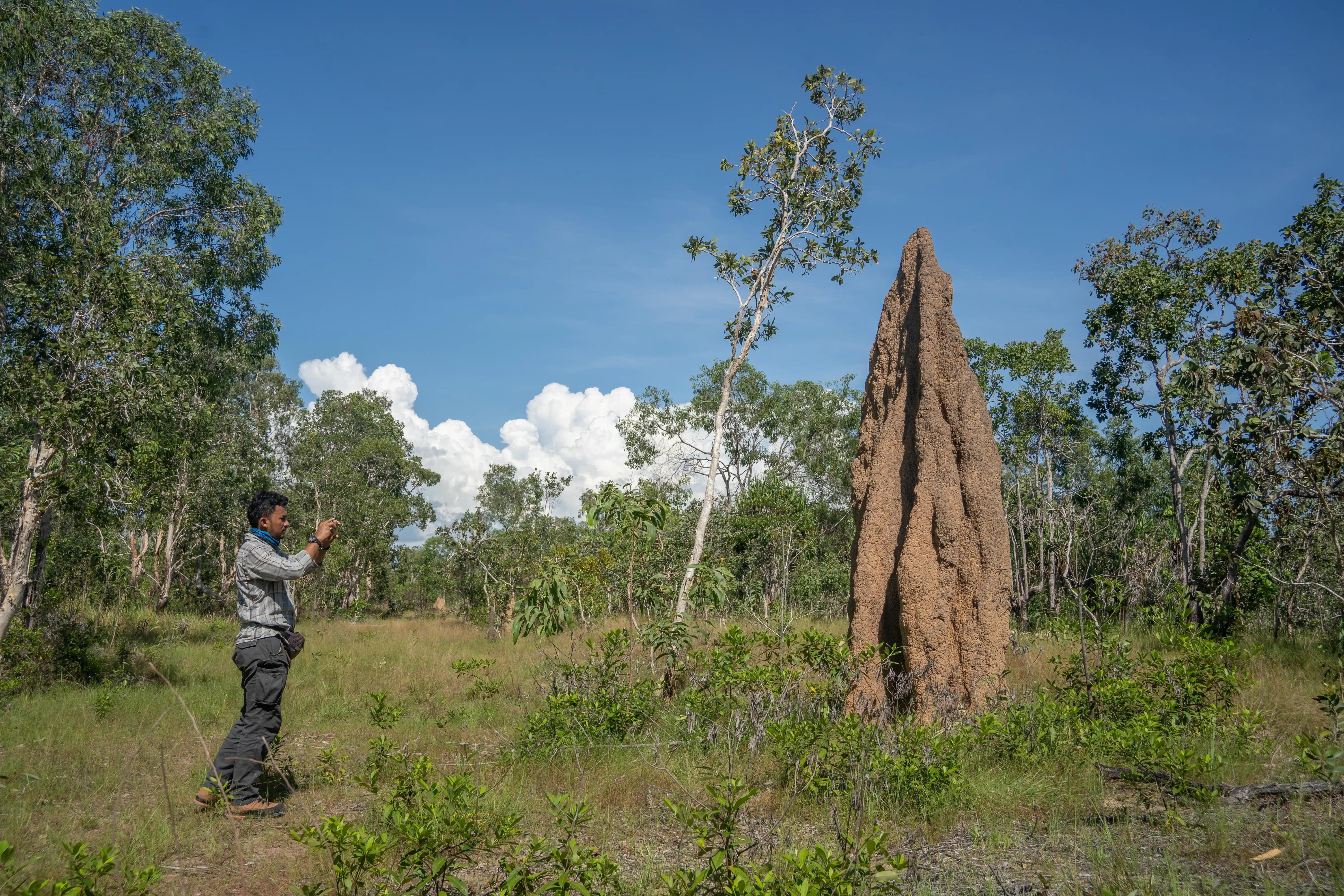
Photography encompassed aerial drone documentation of Rawa Biru and Youram, long canoe sessions at dawn chasing waterbirds, close encounters with Australian pelicans and agile wallabies, musamus termite mounds taller than men, and nightly star photography that required camping in conditions I would describe charitably as formative. The cultural coverage, spanning the full misar ceremony across multiple villages, required coordinating directly with the Marori Men-Gey customary institution.
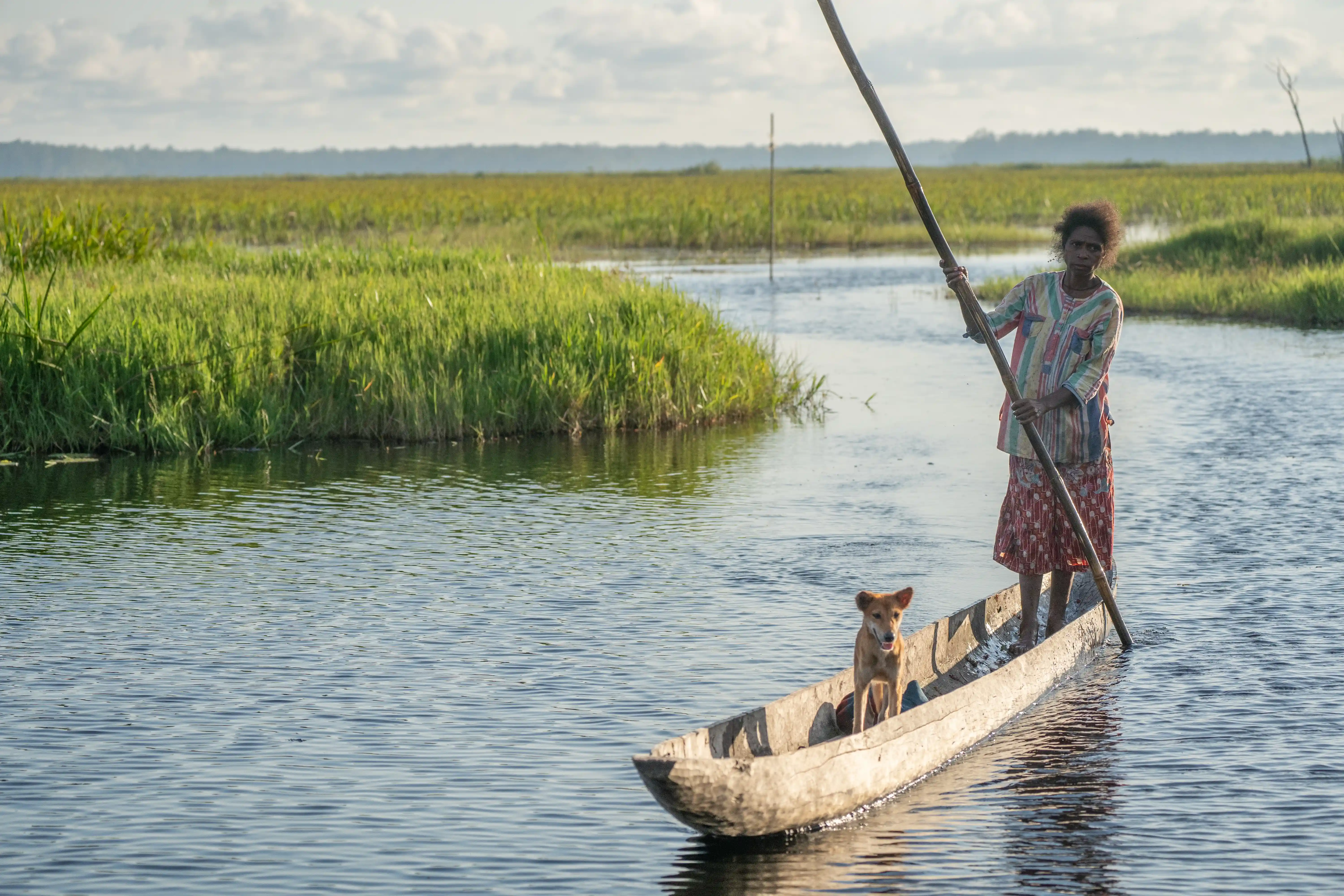
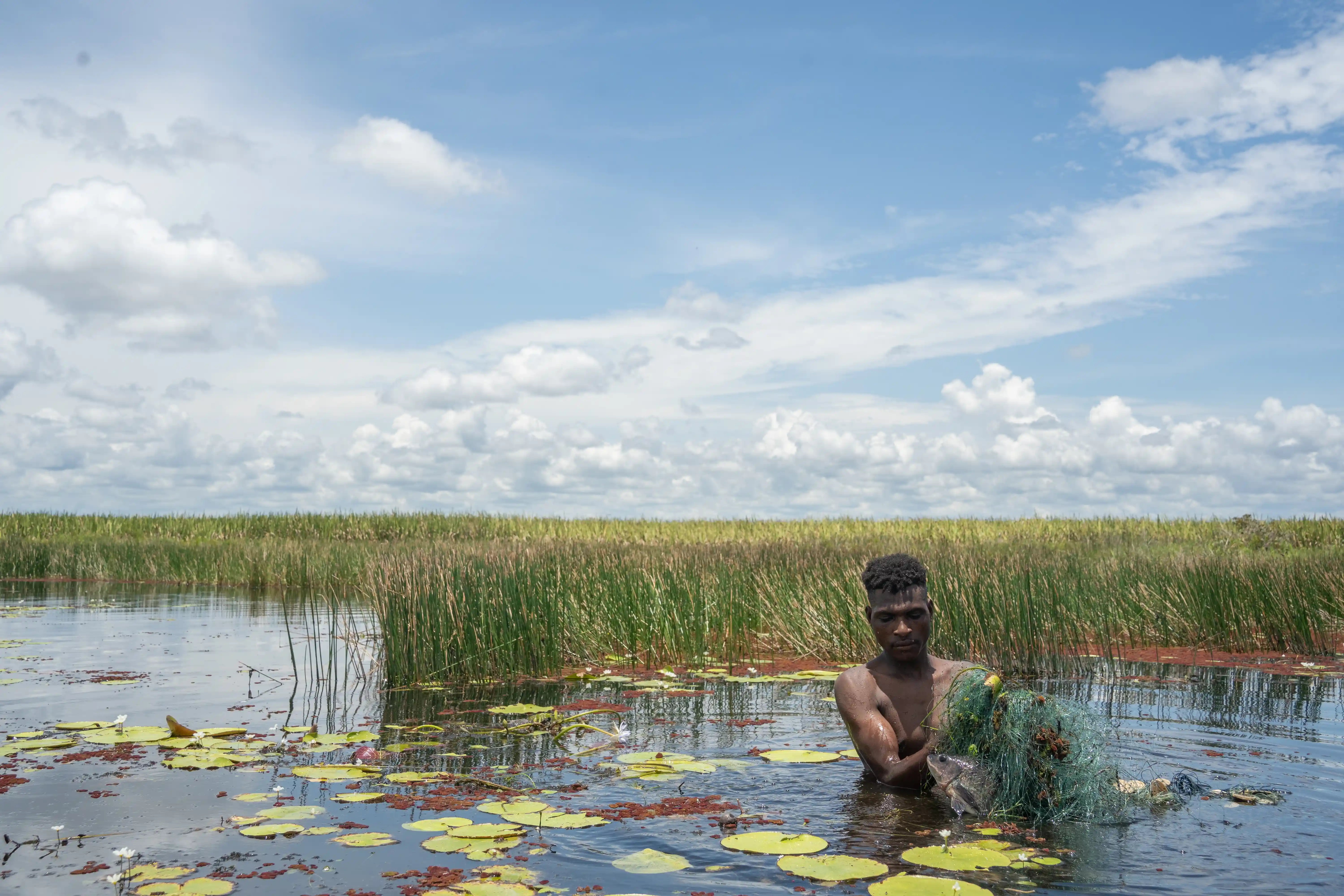
The story was published as a multi-page feature spread in National Geographic Indonesia, covering 431,000 hectares of protected land across a biogeographic zone that connects Indonesia, Papua New Guinea, and Australia's Kakadu National Park, one of the archipelago's least-documented RAMSAR wetland sites.
But the impact I care about most is this: the project brought rare visibility to totemism not as a museum artifact, but as a functioning conservation governance system. The sar/sasi cycle, periods of enforced rest on natural resources triggered by death and ceremony, is as sophisticated as any park management plan ever written. By making that argument visually and narratively, the story challenged the dominant framing that positions indigenous communities as obstacles to formal conservation rather than its original architects.
It also documented what is beginning to fracture: invasive species in Rawa Biru, a Trans-Papua road bisecting the park, and a younger generation navigating customary law in a landscape that is changing faster than the traditions can adapt. A record, while the record still holds.